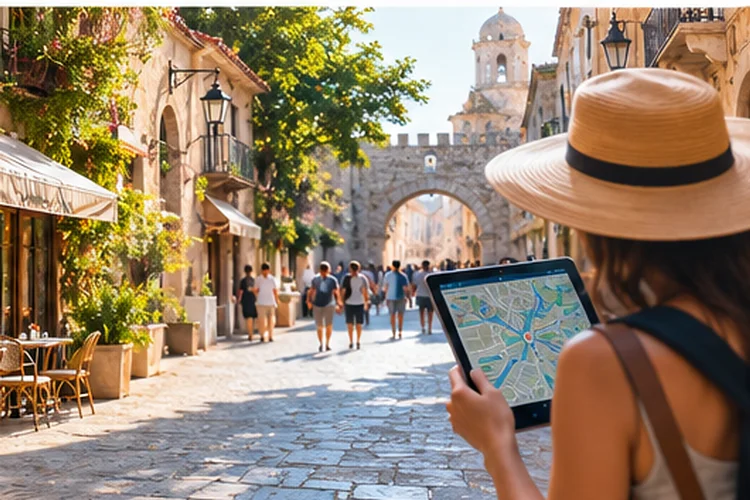
A popular old town can feel empty in the morning and impossible to walk through by lunchtime. Meanwhile, interesting neighborhoods may see hardly any tourists. Often, the problem is when and where people gather.
Looking at How Tourism Platforms Use Data reveals a practical solution. Digital booking tools, visitor dashboards, and travel-search insights can help destinations anticipate pressure and offer better alternatives.
The aim is not to push people around like dots on a screen. It’s to make travel enjoyable while keeping local businesses and residents in the picture.
Understand Where Tourism Pressure Really Builds
Arrival totals rarely tell the full story of crowding. A destination can handle thousands of visitors across a week but struggle when tour buses and cruise passengers arrive within the same two-hour window.
Eurostat reported that 31.1% of EU tourist-accommodation nights in 2025 occurred during July and August. That figure shows a strong seasonal concentration across the region, although individual destinations can follow very different patterns.
Tourism teams should compare overnight stays with timed attraction entries, pedestrian counts, public transport usage, and resident feedback. The result is a clearer picture of when and where demand causes actual stress.
Map the Difference Between Interest and Footfall
Search platforms show places travelers are considering. Booking tools reveal some committed plans, while ticket scans and properly aggregated footfall measures show visits that are happening.
Give Every Dataset a Clear Label
Keep planned trips, sold tickets, and observed visits seperate. Ten thousand online views of a coastal trail don’t mean ten thousand walkers will arrive, and one hotel reservation may involve several people.
Compare patterns by hour, day, and season where coverage permits. If a museum sees long queues every Saturday at noon but spare capacity after 3 p.m., the destination has a specific problem it may be able to solve.
Avoid treating mobile-location estimates as perfect headcounts. Coverage and sampling can vary by location, device use, and data provider.
Offer Better Choices Before Crowds Form
Destination platforms can guide visitors with accurate opening hours, current booking availability, public transport guidance, and quieter alternative activities. Helpful options usually work better than vague warnings about overcrowding.
A visitor choosing a historic market could see an earlier-entry option, a nearby craft workshop, and a suggested walking route. If information comes from actual capacity data, the recommendations can reflect real opportunities rather than advertising priorities.
For sensitive attractions, timed tickets can spread arrivals and protect the experience. But planners should check accessibility needs, refund rules, and how local residents use the same spaces before making reservations mandatory.
Good communcation explains the benefit of these choices instead of making tourists feel unwelcome.
Spread Value Beyond Peak Dates and Famous Streets
Reducing congestion should also create opportunities for businesses outside the main visitor corridor. Online travel platforms and destination websites can highlight quieter seasons, reachable neighborhoods, and local experiences with genuine capacity.
The European Commission’s EU Tourism Dashboard tracks indicators related to environmental, digital, and socioeconomic conditions. Its December 2025 update described 35 indicators and descriptors, mostly covering data through 2024 at that point.
That makes it useful for structural planning rather than minute-by-minute crowd alerts. Combine such evidence with local booking calendars and community input before deciding where to promote additional visitation.
A lesser-known neigborhood should not be marketed heavily without asking whether its residents and services welcome more guests.
Design Capacity Rules Around the Place
A beach, historic chapel, and food market cannot share one universal visitor limit. Capacity depends on environmental sensitivity, usable space, staffing, safety, and how the place functions for residents.
The Global Sustainable Tourism Council’s destination standard calls for monitoring visitor volumes and activities across times and locations. It also supports managing flows at cultural and natural sites while protecting community interests.
For an illustrative heritage tour, a 20-person group limit with six sessions offers 120 places daily. If only four sessions can be staffed safely, the workable capacity falls to 80, regardless of online demand.
Digital ticketing should reflect those real operational limits rather than treating every available slot as a sales target.
Measure Whether Visitors and Residents Benefit
A campaign that shifts tourists from a crowded square to another overcrowded street has achieved little. Success requires a balanced scorecard: queue times, satisfaction, local spending, transport strain, complaints, and site conditions.
The OECD recommends stronger destination-level coordination and better evidence for managing tourism’s social and environmental effects. Set up a consistant review with hotels, guides, transport operators, and resident representatives.
Track who gains from the changes. If smaller businesses receive more bookings but neighborhood complaints rise, adjust the plan rather than celebrating only the sales figures.
Publish understandable summaries and explain uncertainties. A transparent dashboard helps people trust the decisions behind destination management.
Tourism platforms can help destinations manage demand by revealing when visitors arrive, where pressure builds, and which alternatives are genuinely available.
Better information only matters when it leads to fair, practical decisions for travelers and communities.
Choose one crowded area, measure its busiest periods, and test a small change in visitor guidance. Review the results with residents before expanding the approach.